Geopolitics & international relations
Strait of Hormuz: Is the Law of the Sea the Real Casualty?
· 9 min read
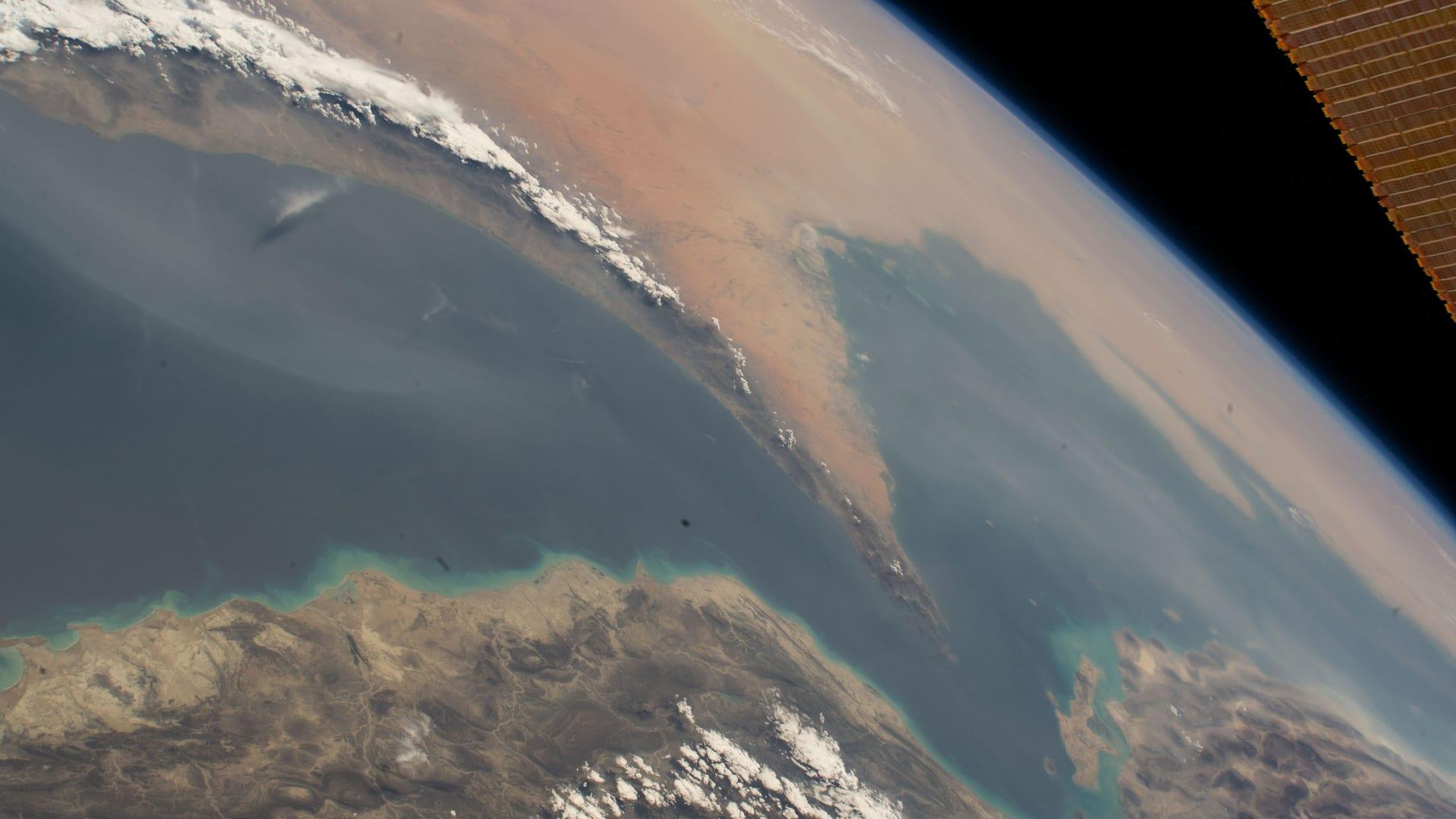
On February 28, 2026, the United States and Israel launched a campaign of strikes against Iran. Iran's most consequential response targeted not a territory but a passage: Tehran threatened commercial shipping and announced that it had mined the traffic separation scheme of the Strait of Hormuz, bringing about its de facto closure (Braw, 2026). Before the war, some 129 ships passed through this stretch of water, 21 nautical miles wide at its narrowest point, every day. By March 10, only four were doing so, a drop of 97% (UNCTAD, 2026).
Eight months later, despite two ceasefires and a memorandum of understanding, the strait remains almost closed. The International Monetary Fund's PortWatch data record an average of fewer than four visible transits a day in October, compared with about 85 under the same method before the crisis (IMF, 2026b). The scenario energy specialists had described for decades as a nightmare has thus materialized, and it is lasting. The Hormuz crisis makes it possible to test three propositions that international relations scholarship had until now discussed in the abstract: that a militarily inferior state can close a strait, that global markets can absorb such a shock, and that the legal regime governing international straits is robust enough to survive being circumvented. The first two have largely been confirmed. The third is the one that should worry us most.
What Theory Predicted
In 2008, Caitlin Talmadge published the reference study on the question in International Security. She showed that Iran had the means (mines, anti-ship missiles, fast attack craft) to halt or impede traffic in the strait for a month or more, and that any American attempt to reopen the waterway was likely to escalate into sustained, large-scale air and naval operations. Above all, she stressed that Iran could impose significant economic and military costs even without truly closing the strait (Talmadge, 2008). Other work was more skeptical. William O'Neil, in his reply to Talmadge, emphasized the price such a closure would exact from Iran itself, as an act akin to piracy that would directly affect the interests of most states (O'Neil and Talmadge, 2009).
Reality has exceeded Talmadge's assumption on duration, but it has confirmed her central insight: closing a strait does not require sinking ships, it is enough to make passage too risky. Insurers raised their premiums, but war-risk coverage remained available. Most shipowners nonetheless avoided the passage because of the immediate danger to vessels and crews (Braw, 2026). Up to the June ceasefire, the International Maritime Organization had recorded 39 incidents, 22 vessels attacked and at least 12 seafarers killed (Braw, 2026). These figures are serious, but they bear no proportion to the collapse in traffic. It was the perception of risk, far more than actual destruction, that emptied the strait.
The timeline also shows that military superiority does not easily translate into control of a narrow maritime space. A two-week ceasefire was agreed on April 8, followed by an American blockade of Iranian ports imposed on April 13. On June 17, a memorandum of understanding provided for the lifting of the blockade and free passage for commercial vessels for 60 days. By late June, some thirty ships a day were again using the available lanes, less than a quarter of pre-war traffic. As early as July 7 and 8, Iranian attacks on ships using unapproved routes and the American strikes that followed brought the truce to an end (Braw, 2026).
The Shock and Its Shock Absorbers
The strait's economic weight explains the scale of the crisis. In the last week of February, it accounted for 38% of global seaborne trade in crude oil, 29% of liquefied petroleum gas and 19% of liquefied natural gas, as well as about one third of global seaborne fertilizer trade. Asia was the destination of 84% of the crude and 83% of the LNG that passed through it (UNCTAD, 2026). In 2025, some 20 million barrels a day of crude oil and petroleum products transited the strait, roughly a quarter of global seaborne oil trade (IEA, 2026).
Markets reacted accordingly. Brent rose from $68 on February 26 to $118 on April 29 (Braw, 2026). On March 11, the 32 member countries of the International Energy Agency unanimously decided to make 400 million barrels from their emergency reserves available to the market. It was the largest collective action in the agency's history, and only the sixth since its creation in 1974 (IEA, 2026).
In an article that has become a classic, Eugene Gholz and Daryl Press (2010) argued that fears about oil supply were largely overstated, because the market has powerful adaptive mechanisms: spare production capacity, stocks, rerouting of cargoes and substitution. They acknowledged, however, that a small subset of events could overwhelm those mechanisms. The Hormuz crisis sits precisely on that boundary. On the one hand, the global economy has not collapsed: the IMF still projects global growth of 3.1% in 2026 (IMF, 2026a). On the other, the shock absorbers have been severely tested. The main bypass route was itself targeted. Saudi Arabia's East-West pipeline, which allows exports to the Red Sea, was struck repeatedly, and on July 20 the Houthis declared a maritime blockade of Saudi Arabia. By early September, Saudi oil production had fallen to 6.24 million barrels a day, its lowest level since 1990 (Coates Ulrichsen, Krane and Martín Gil, 2026). A closed strait thus created pressure on a second one, Bab el-Mandeb.
Above all, the cost of the shock is very unevenly distributed. In its October outlook, the IMF projects 2026 contractions of 16.7% in Kuwait, 16.0% in Iraq, 15.6% in Qatar and 11.3% in Bahrain, while Saudi Arabia, thanks to more diversified export routes, would limit its decline to 3.3% and Oman would grow by 4.1%. Iran's own economy would shrink by 7.6% (IMF, 2026a). For developing countries that import energy, fertilizers and staple foods, UNCTAD (2026) warned as early as March that rising energy, transport and food costs could strain public finances already constrained by debt service. The overall resilience of the market therefore says nothing about the vulnerability of those at the end of the chain.
Tehran's Toll Booth and the Erosion of Transit Passage
It is on legal ground that the crisis may leave its most lasting mark. The United Nations Convention on the Law of the Sea, signed in 1982, created a special regime for straits used for international navigation: transit passage. Under Article 38, all ships enjoy this right, which shall not be impeded. Article 44 adds that states bordering straits shall not hamper or suspend such passage (United Nations, 1982). This regime is one of the Convention's founding bargains: coastal states obtained the extension of their territorial sea to 12 nautical miles, in exchange for a guarantee that the major straits would remain open.
Hormuz exposes the fragility of that bargain. Neither Iran nor the United States has ratified the Convention. Upon signing it, Iran declared that non-party states would not enjoy the right of transit passage through the strait, which did not prevent it, until the war, from allowing U.S.-flagged vessels through. The United States, for its part, has long asserted that right on the basis of customary international law (Braw, 2026). The legal regime of the world's most strategic strait therefore rested on a custom that its two main protagonists interpret differently.
Since the spring, that ambiguity has turned into open contestation. In early May, Iran created a fee-based lane along its coast and a Persian Gulf Strait Authority responsible for issuing passage permits and collecting payments, which amounts to institutionalizing a toll that runs against the very principle of transit passage (Braw, 2026). On July 13, the American president announced in turn that the United States would keep the strait open while charging ships a fee of 20% of the value of their cargo, a measure that would also violate the Convention (Braw, 2026). Within a few weeks of each other, the main challenger to freedom of navigation in the strait and its traditional guarantor thus found themselves defending the idea that a strategic passage can be monetized.
The risk of contagion is real. As early as April 2026, Indonesia's finance minister floated the idea of a levy on passage through the Strait of Malacca (Braw, 2026). Elisabeth Braw (2026) sums up the threat: more violations and fewer enforcers, since the United States has weakened its moral authority as the de facto guardian of the maritime order. A rule whose main defender is willing to make an exception ceases to be a rule and becomes a bargaining position.
A Weapon of the Weak
Finally, the Hormuz crisis sheds light on a broader theoretical debate about economic weapons. Henry Farrell and Abraham Newman (2019) showed that interdependence can be "weaponized": states that control the central nodes of global networks, such as financial messaging systems or internet infrastructure, can use them to monitor their adversaries or deny them access, what they call the chokepoint effect. Their theory primarily describes the power of the states best positioned in asymmetric networks, first among them the United States.
Hormuz offers the inverted version. A militarily outmatched state, under blockade and with a shrinking economy, holds a chokepoint that geography has given it and that its adversary's air and naval superiority is not enough to neutralize. Here, the capacity to inflict harm stems not from centrality in a network but from proximity to an unavoidable passage. The weapon nevertheless carries a cost for the one who wields it: Iran itself exports through the strait, and the war, the American blockade of its ports and sanctions weigh heavily on its own economy (IMF, 2026a). What is at stake is therefore not a classic contest of strength, but a test of endurance in which each side is betting that the other will give in first.
What to Watch
The IMF's baseline assumes a gradual reopening of the strait from March 2027 and a return to pre-war conditions by October 2027, specifying that this is a working assumption and not a forecast of when the war will end (IMF, 2026a). Even if that timeline holds, the decisive question will not be whether the strait reopens, but on what terms. A settlement that restored traffic while recognizing a right for Iran, or anyone else, to issue permits or collect fees would enshrine the idea that passage through an international strait is negotiable. A settlement that unreservedly reaffirmed transit passage, ideally backed by a multilateral mine-clearance and monitoring mechanism, would instead preserve one of the major achievements of international law since 1982.
Three signals will make it possible to judge in the months ahead: the content of any future agreement on the administration of the strait, in particular the fate of the authority created by Tehran; the reaction of other states bordering strategic straits, starting with Malacca; and the ability of Gulf states to develop bypass routes that would durably reduce Hormuz's strategic value. The war will eventually end and the ships will return. The question is whether the law will return with them.
(The author)

Strategy, Digital and AI Consultant
Trained in political science (from an honours bachelor's to a master's at Université de Montréal), I'm now completing a graduate diploma (DESS) in private- and public-sector management at HEC Montréal.
Keep reading
Can Canada Really Break Free from Washington?
From the "rupture" declared at Davos to the Alliance for the Future signed with the European Union, Canada's middle-power doctrine tested against international relations theory and the reality of asymmetric interdependence.
November 14, 2026 · 10 min
The AI ROI Paradox: Why Adoption Isn't Showing Up in the Bottom Line Yet
Nearly nine in ten organisations use AI, yet its effect on financial results is flat. What the data say, and the decisions that set apart the few organisations that truly benefit.
November 13, 2026 · 7 min
Horne Smelter: Can a City Council Vote Create Social Acceptability?
In February 2026, Quebec asked the City of Rouyn-Noranda to confirm the social acceptability of a reprieve granted to Glencore. Four days later, the council voted. A look back at a municipal vote that became a provincial argument.
November 13, 2026 · 7 min